- ES Español (Latinoamérica)

- EN English

4.8. Compatibility of the Career with International Standards
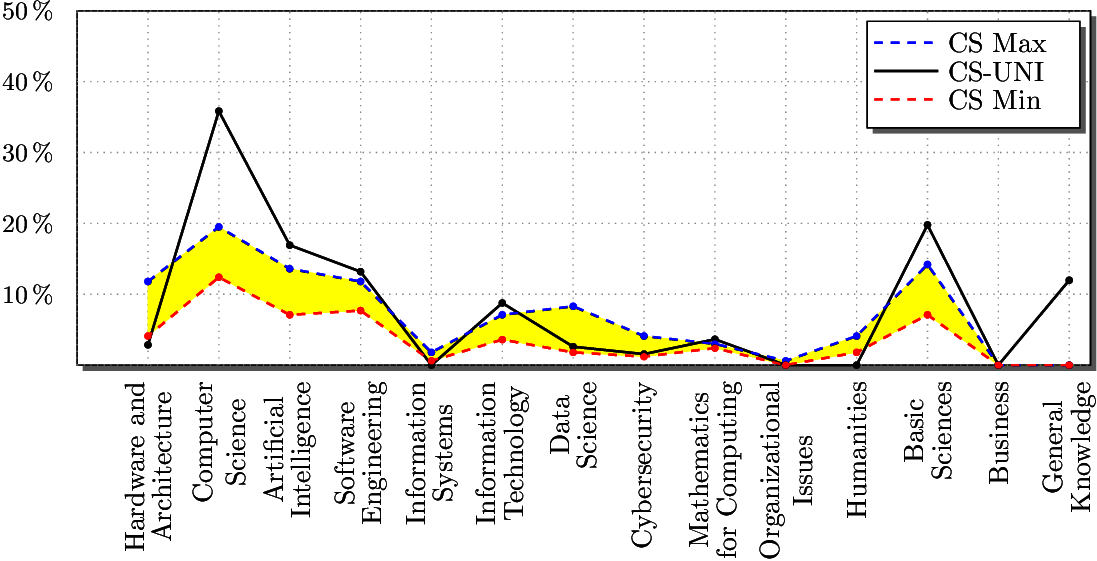
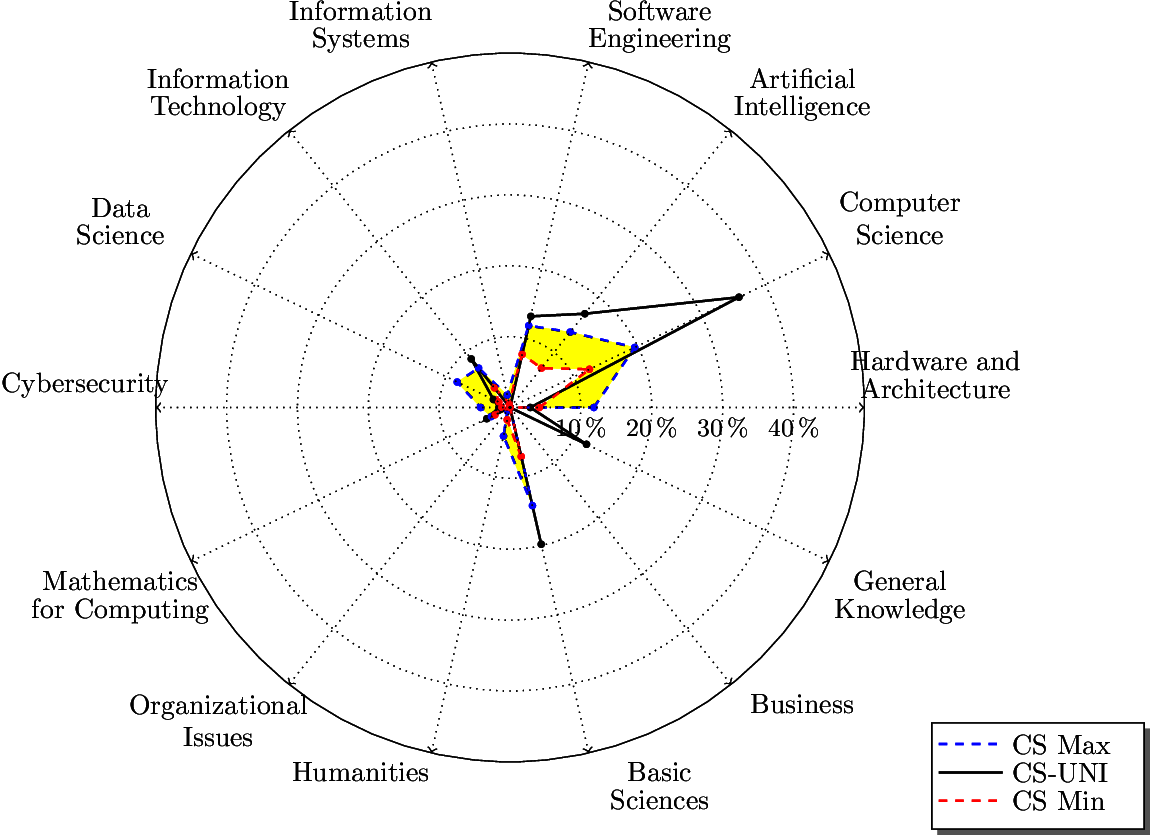
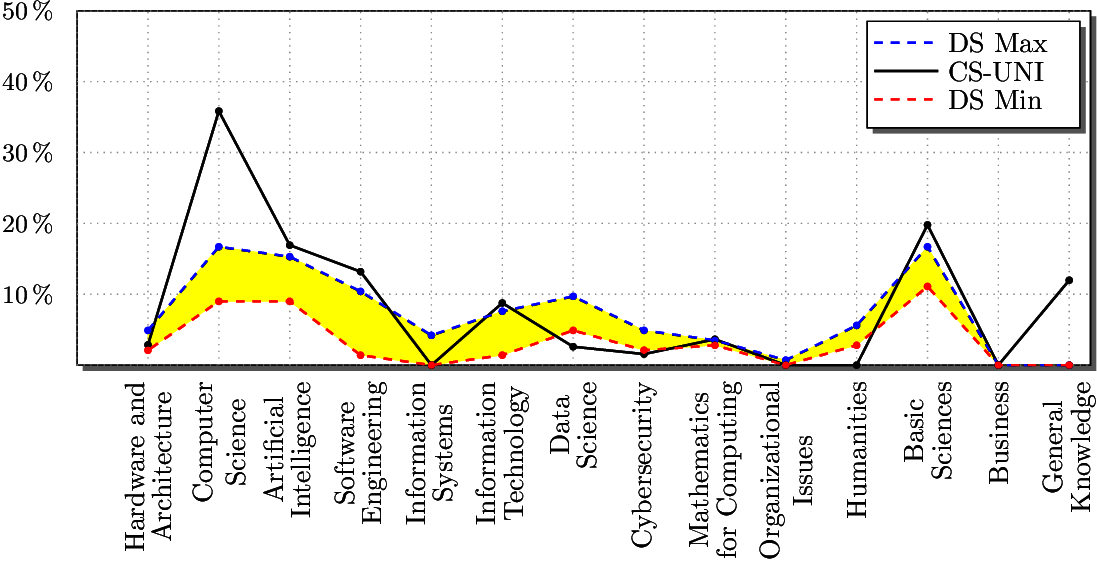
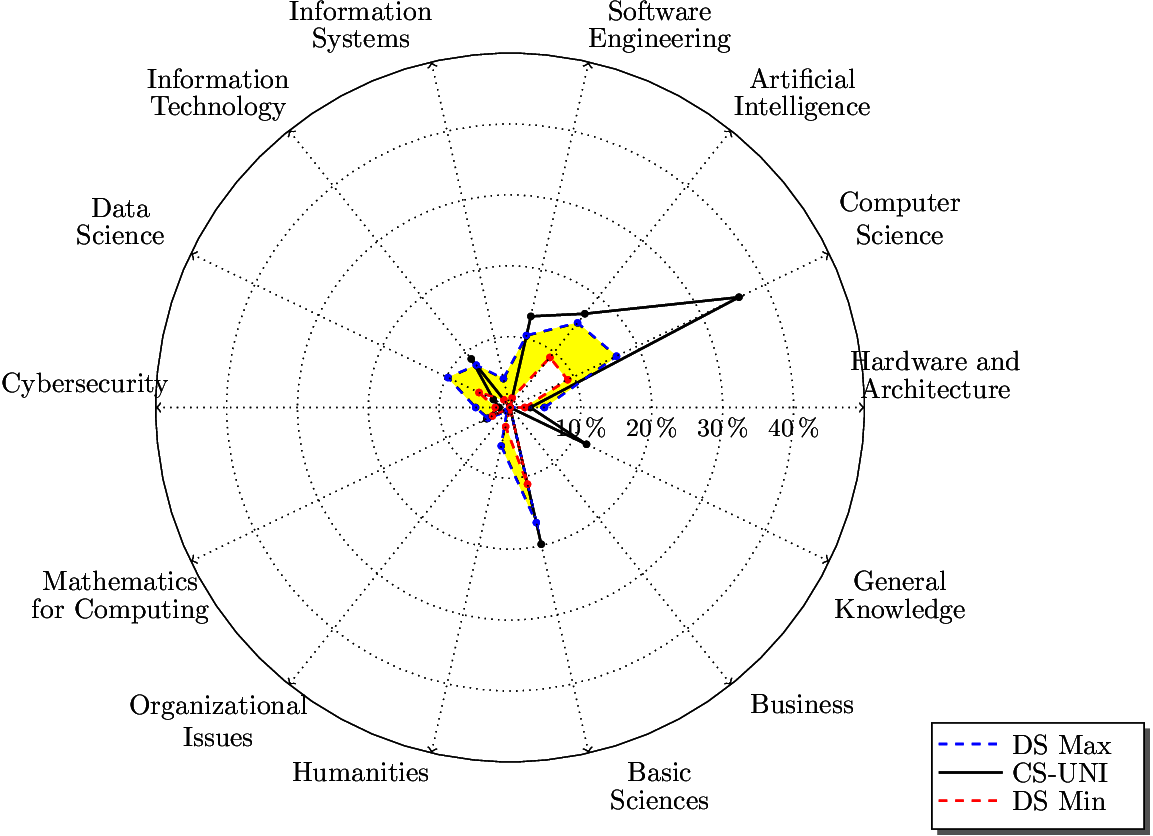
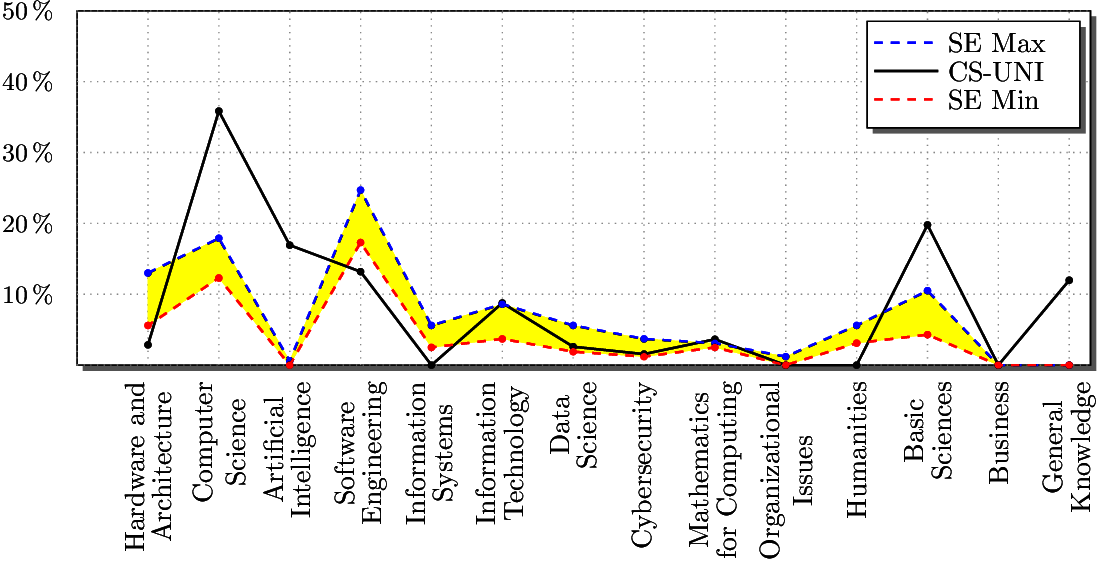
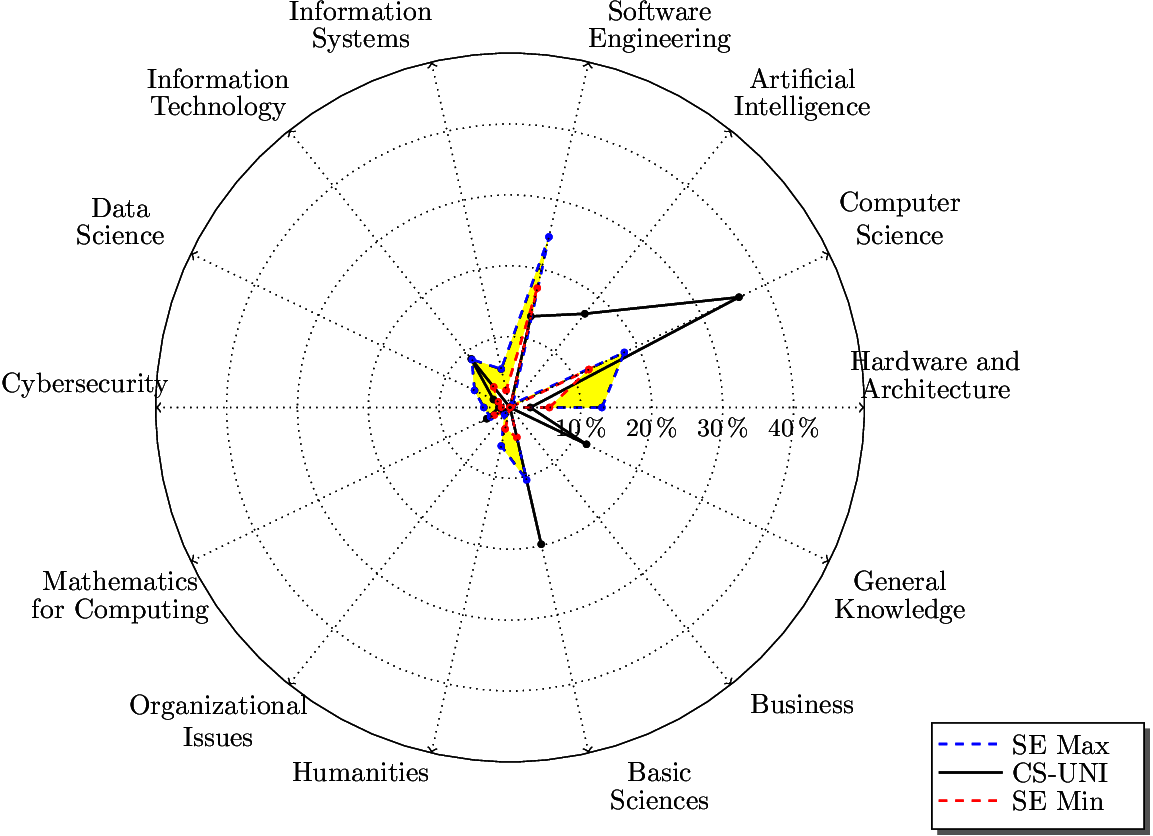
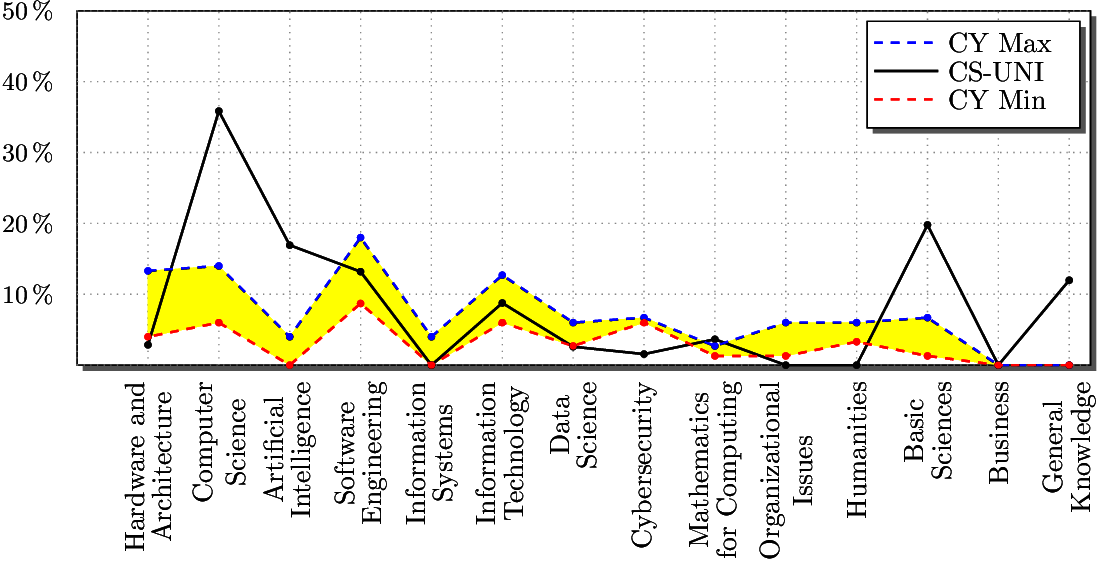
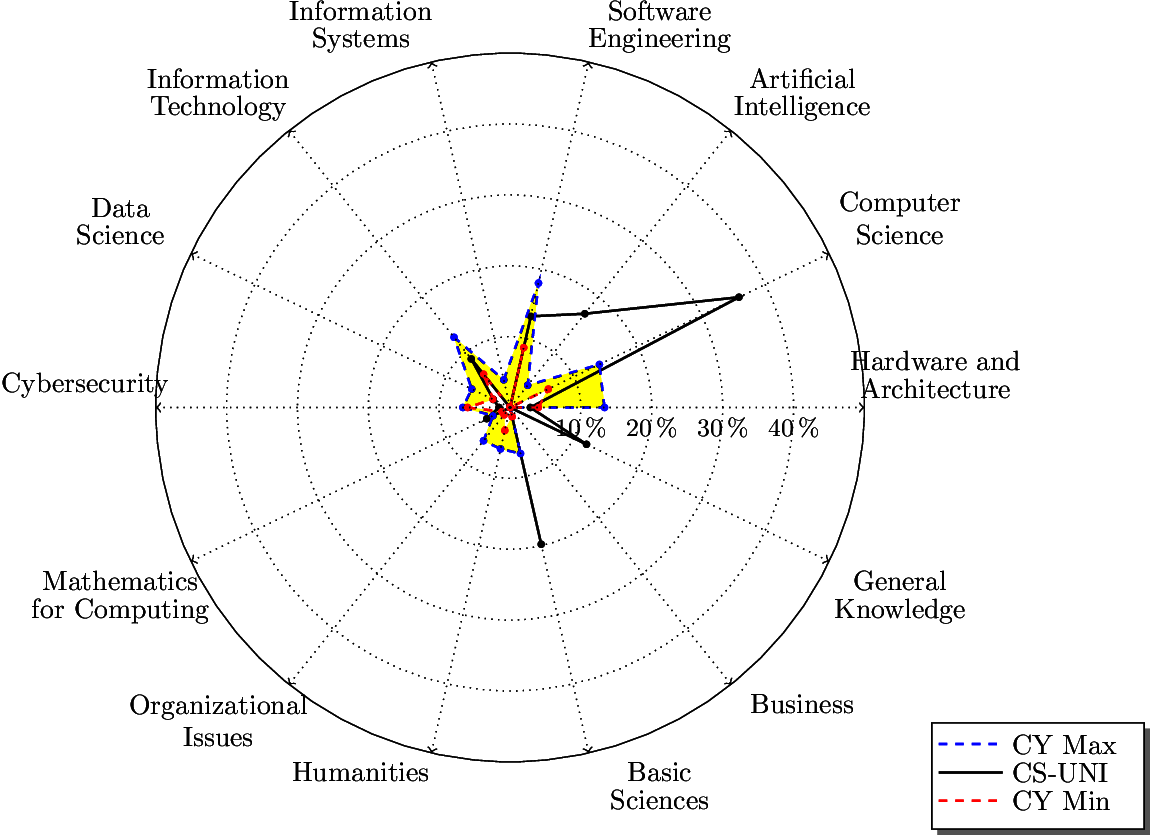
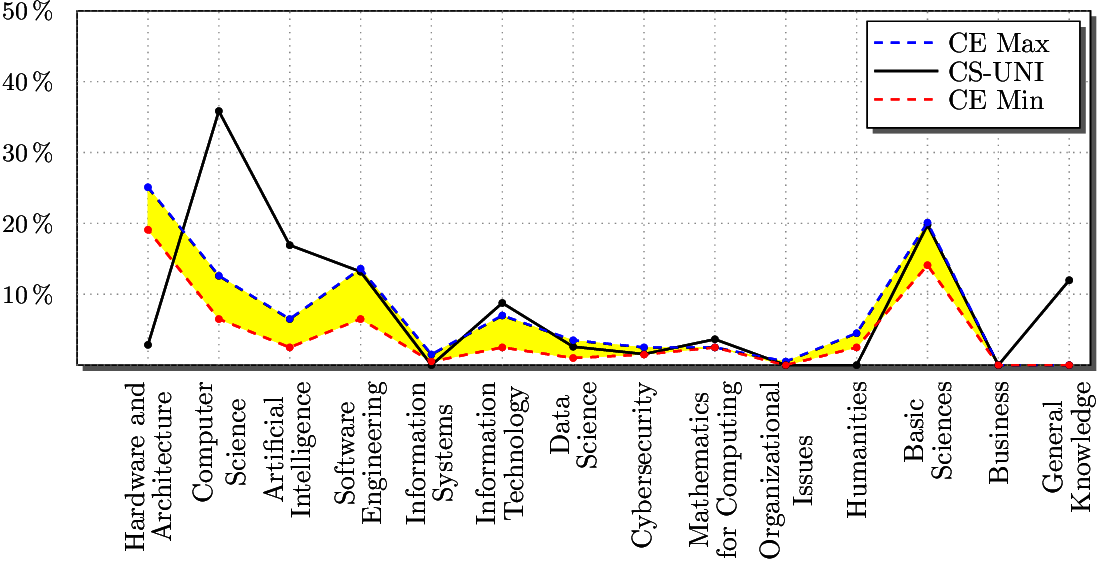
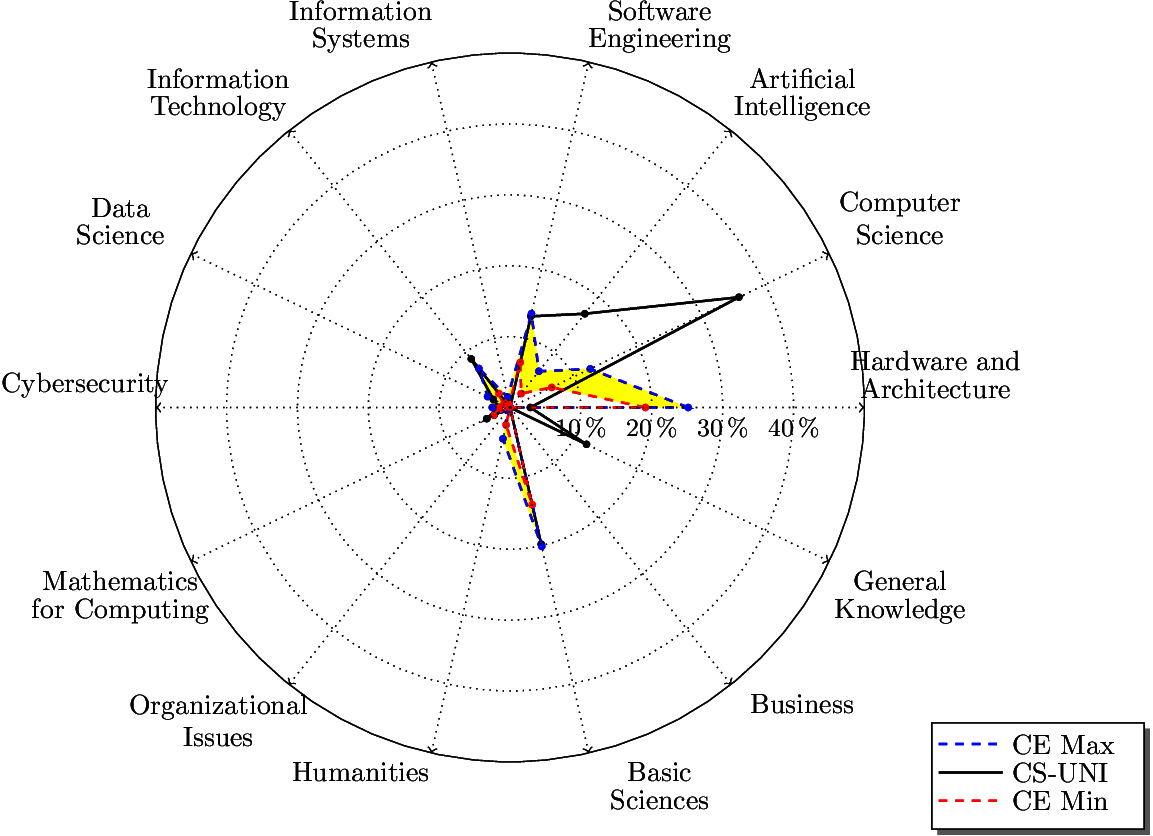
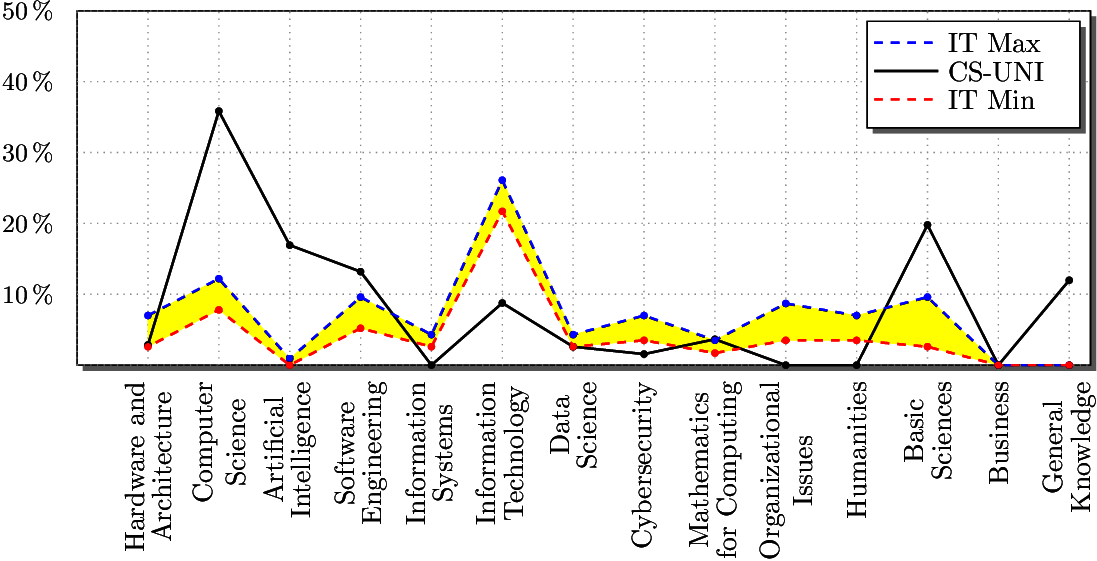
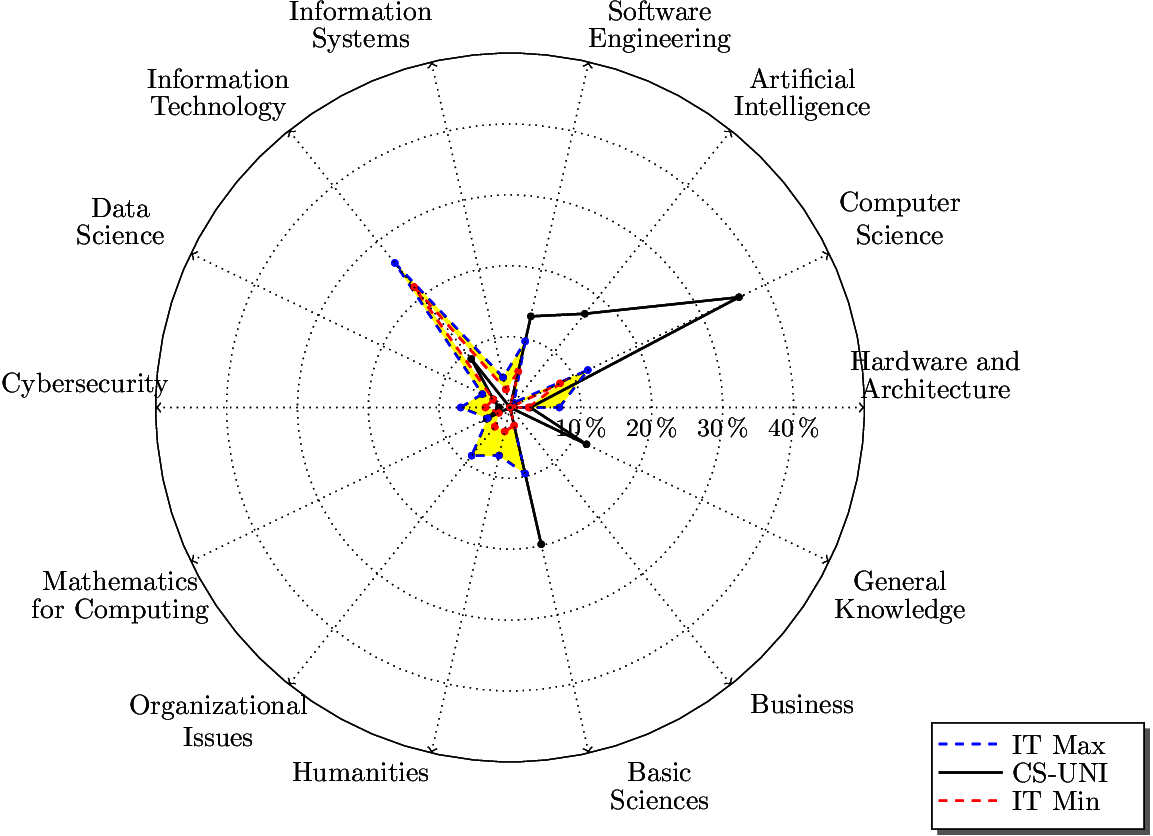
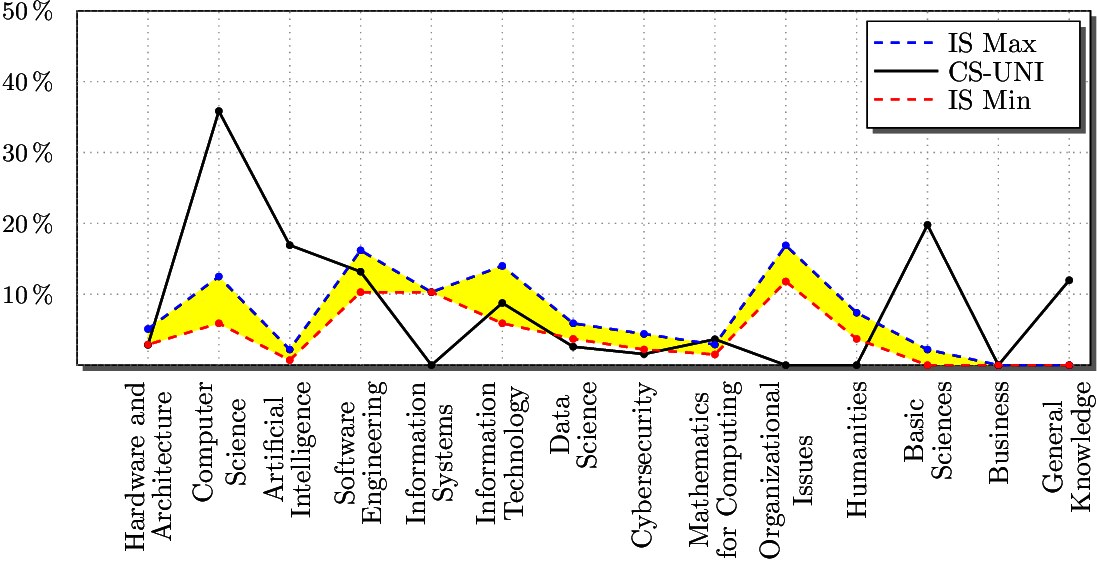
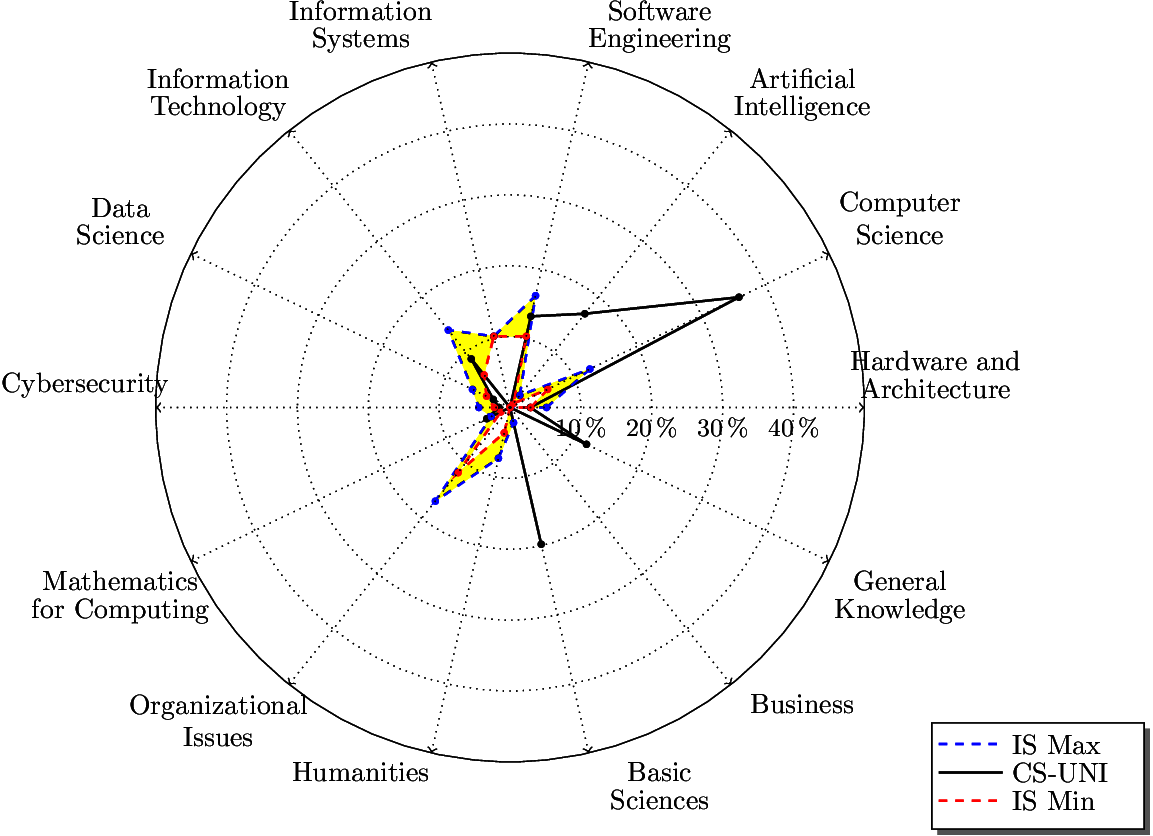
In this section, we present the distribution of courses by concentration areas in contrast to the international proposals of Computing Curricula from IEEE-CS/ACM. It is necessary to note that in some cases, courses may appear in more than one axis as they have content from more than one area. For example, the operating systems course contains application units that can be classified in Information Technology but at the same time, it contains fundamentals of how an Operating System is structured, which belongs to the Computer Science axis. In these cases, the credits have been divided between the corresponding axes.
- Hardware and Architecture (9.50 Créditos)
- CS221 Computer Systems Architecture (4th Sem)
- AI369 Robotics (9th Sem)
- Computer Science (130.17 Créditos)
- BIC101 Introduction to Computing (1st Sem)
- CS100 Introduction to Computer Science (2nd Sem)
- CS112 Objects-oriented programming I (2nd Sem)
- CS113 Objects-oriented programming II (3rd Sem)
- CS210 Algorithms and Data Structures (4th Sem)
- CS211 Theory of Computation (4th Sem)
- CS401 Research Methodology (4th Sem)
- CS212 Analysis and Design of Algorithms (5th Sem)
- CS2S1 Operating systems (5th Sem)
- CS231 Networking and Communication (6th Sem)
- CS312 Advanced Data Structures (6th Sem)
- CS342 Compilers (6th Sem)
- CS251 Computer Graphics (7th Sem)
- CS2H1 User Experience (UX) (7th Sem)
- CS281 Computing in Society (8th Sem)
- CS3P1 Parallel and Distributed Computing (8th Sem)
- CS402 Capstone Project I (8th Sem)
- CS403 Capstone Project II (9th Sem)
- CB309 Bioinformatics (9th Sem)
- CS351 Topics in Computer Graphics (9th Sem)
- CS353 Quantum Computing (9th Sem)
- CS3P3 Internet of Things (9th Sem)
- CS3P2 Cloud Computing (10th Sem)
- CS404 Research Workshop (10th Sem)
- Artificial Intelligence (60.50 Créditos)
- AI161 Applied AI (3rd Sem)
- CS261 Artificial Intelligence (5th Sem)
- AI263 Introduction to Machine Learning (6th Sem)
- AI264 Deep Learning (7th Sem)
- AI268 Computational Vision (8th Sem)
- AI365 Advanced Generative AI Models (9th Sem)
- AI369 Robotics (9th Sem)
- AI367 Topics in Artificial Intelligence (10th Sem)
- AI368 Evolutionary Computing (10th Sem)
- Software Engineering (41.67 Créditos)
- CS112 Objects-oriented programming I (2nd Sem)
- CS113 Objects-oriented programming II (3rd Sem)
- CS291 Software Engineering I (5th Sem)
- CS292 Software Engineering II (7th Sem)
- CS2H1 User Experience (UX) (7th Sem)
- CS391 Software Engineering III (8th Sem)
- CS393 Information systems (8th Sem)
- CS394 Software Architecture and DevOps for Cloud Software (8th Sem)
- CS395 Software Quality (8th Sem)
- CS392 Tópicos en Ingeniería de Software (9th Sem)
- Information Systems
- Ninguno
- Information Technology (32.17 Créditos)
- CS2B1 Platform Based Development (3rd Sem)
- CS271 Data Management (4th Sem)
- CS272 Databases II (5th Sem)
- CS2S1 Operating systems (5th Sem)
- CS231 Networking and Communication (6th Sem)
- CS2H1 User Experience (UX) (7th Sem)
- CS281 Computing in Society (8th Sem)
- CS370 Big Data (9th Sem)
- CS3P3 Internet of Things (9th Sem)
- CS3P2 Cloud Computing (10th Sem)
- Data Science (10.00 Créditos)
- CS271 Data Management (4th Sem)
- CS272 Databases II (5th Sem)
- CS370 Big Data (9th Sem)
- Cybersecurity (6.00 Créditos)
- CS3I1 Computer Security (8th Sem)
- Mathematics for Computing (14.00 Créditos)
- CS1D1 Discrete Structures (2nd Sem)
- CS311 Algorithms for Complex Problems (6th Sem)
- Organizational Issues
- Ninguno
- Humanities
- Ninguno
- Basic Sciences (76.00 Créditos)
- BMA101 Linear Algebra (1st Sem)
- BMA102 Differential Calculus (1st Sem)
- BCH101 Chemistry I (1st Sem)
- BMA103 Integral Calculus (2nd Sem)
- BFI101 Physics I (2nd Sem)
- BMA104 Advanced Differential and Integral Calculus (3rd Sem)
- STA251 Probability Calculation (3rd Sem)
- MA202 Numerical Methods (4th Sem)
- FI201 Computational Physics (6th Sem)
- Business
- Ninguno
- General Knowledge (34.00 Créditos)
- BEI101 Technical and professional English I (1st Sem)
- BEI102 Technical and professional English II (2nd Sem)
- BEI201 Technical and professional English III (3rd Sem)
- BEI202 Technical and professional English IV (4th Sem)
- BEI203 Technical and professional English V (5th Sem)
- FG211 Professional Ethics (7th Sem)
- FG106 Theater (8th Sem)
- EX301 Extracurricular Activities (8th Sem)
- CS400 Pre-professional internships (9th Sem)
- FG350 Leadership and Performance (10th Sem)
Considering this distribution, figures 4.17 to 4.29 allow us to have a graphical view of this curriculum against the proposals of programs presented by IEEE-CS/ACM in the Computing Curricula.